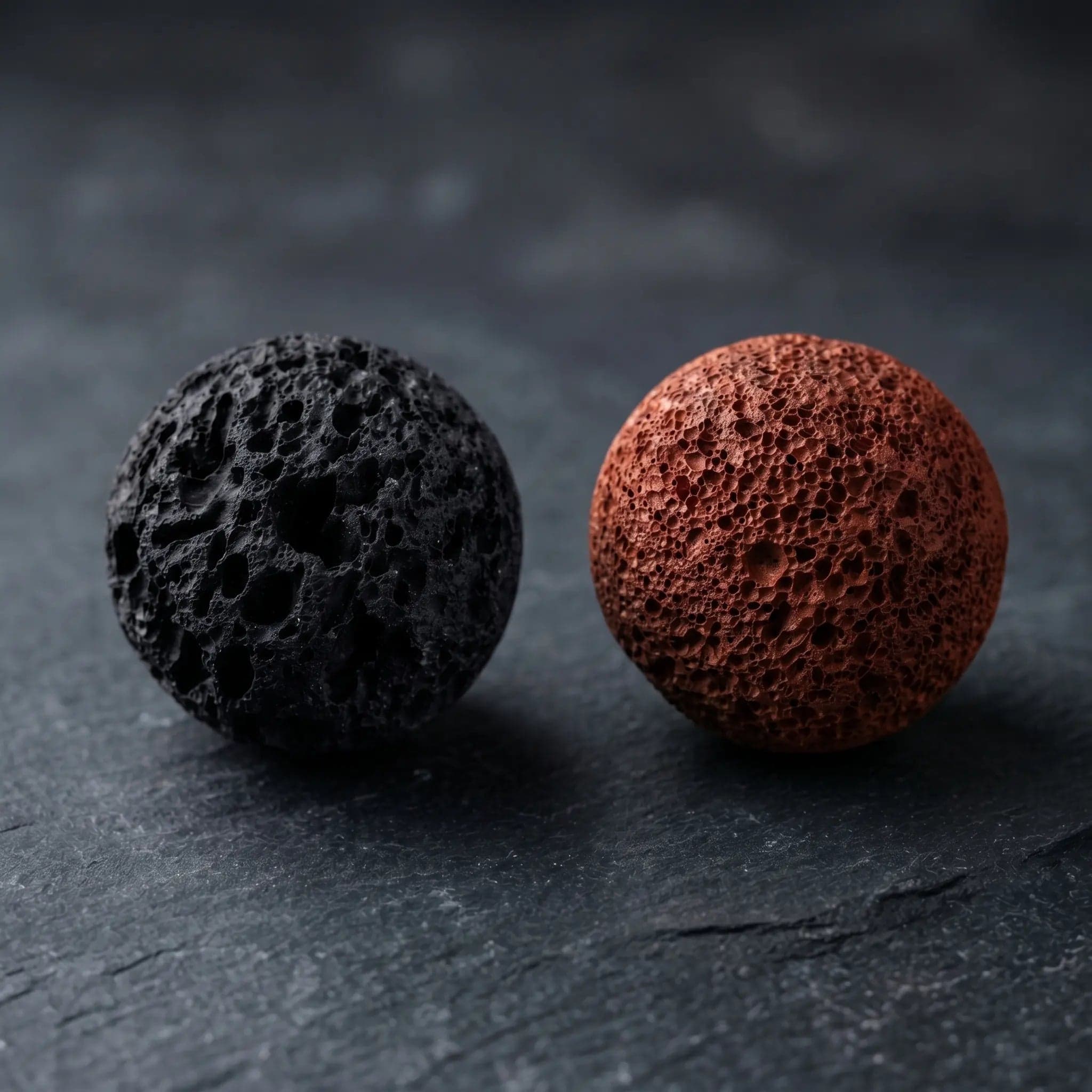
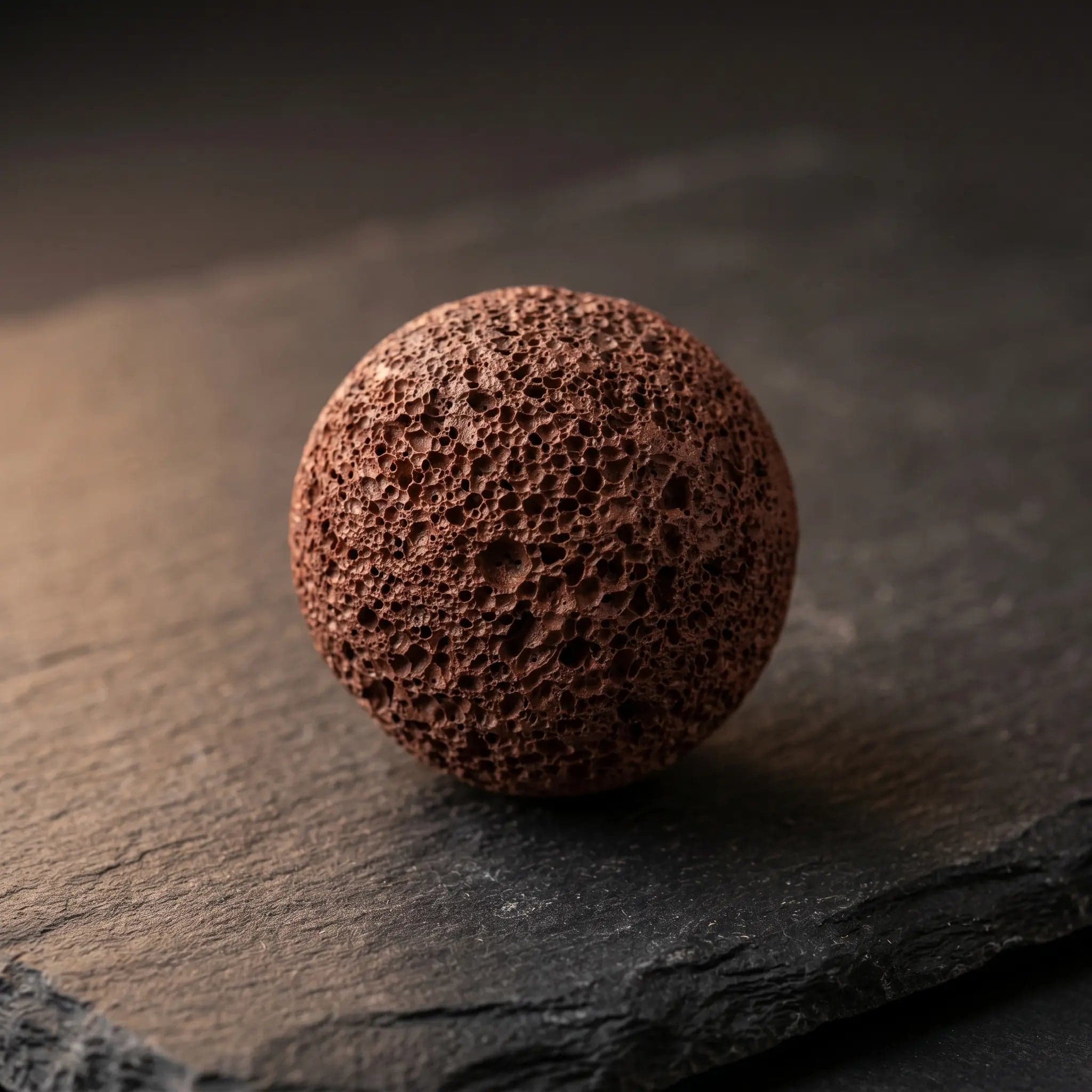
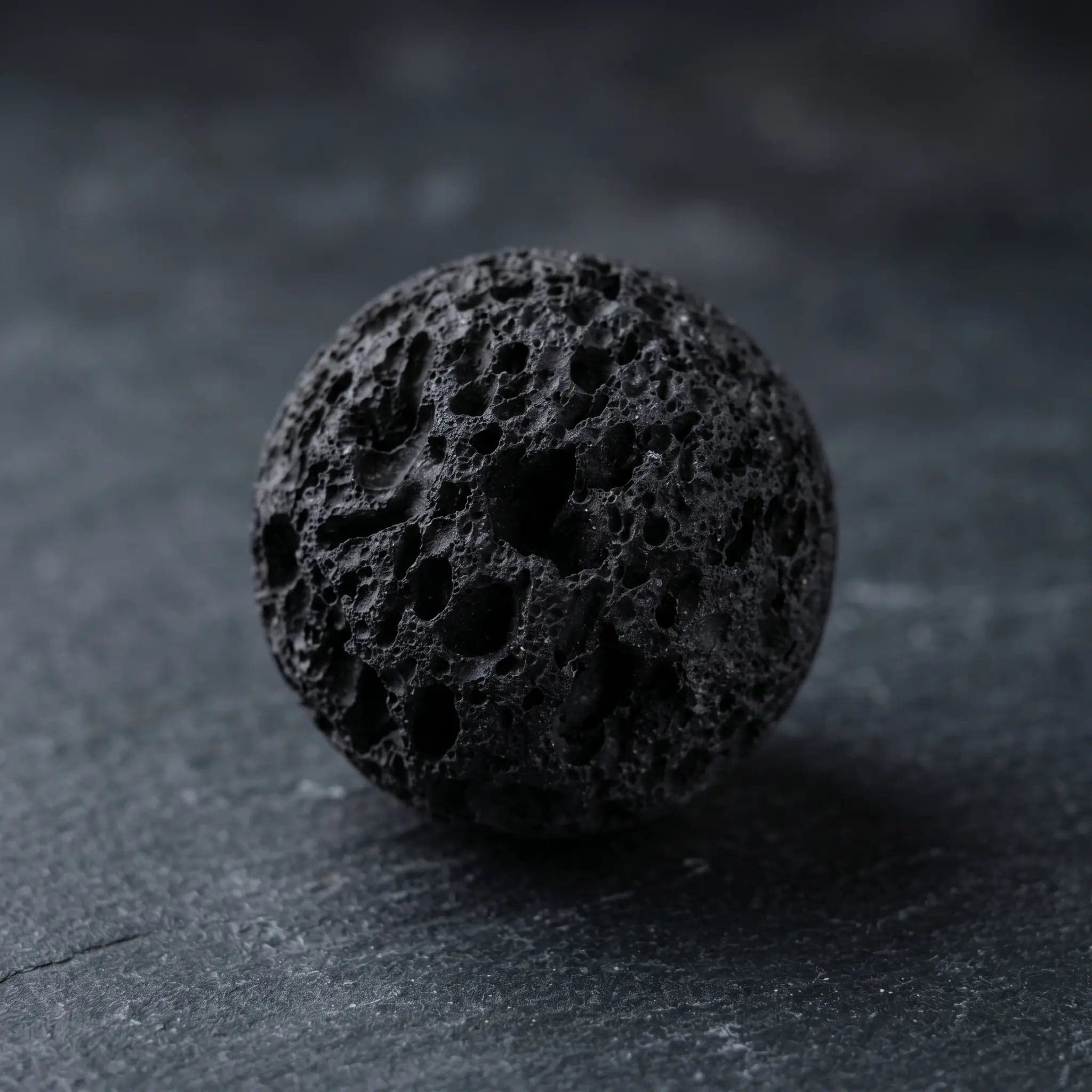
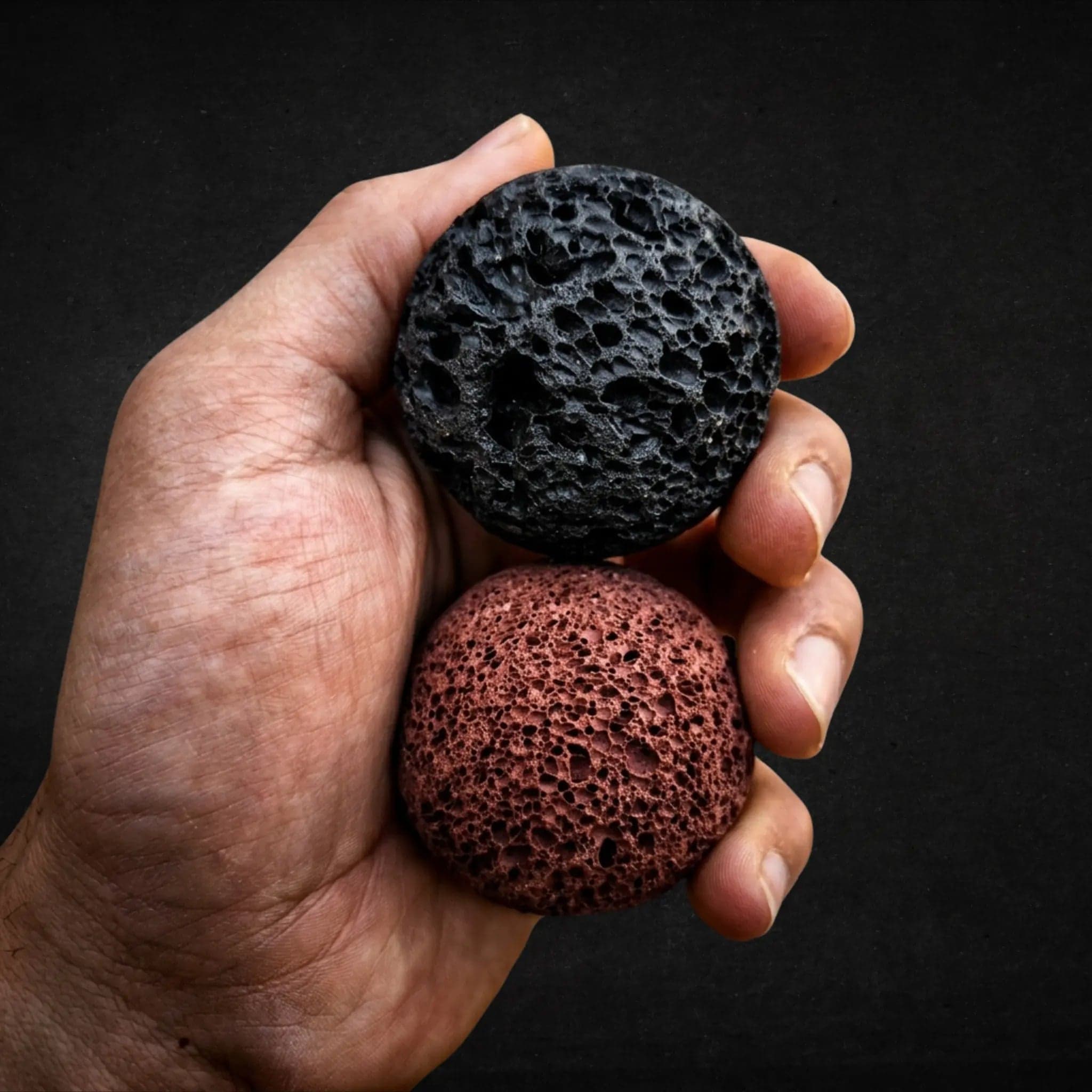
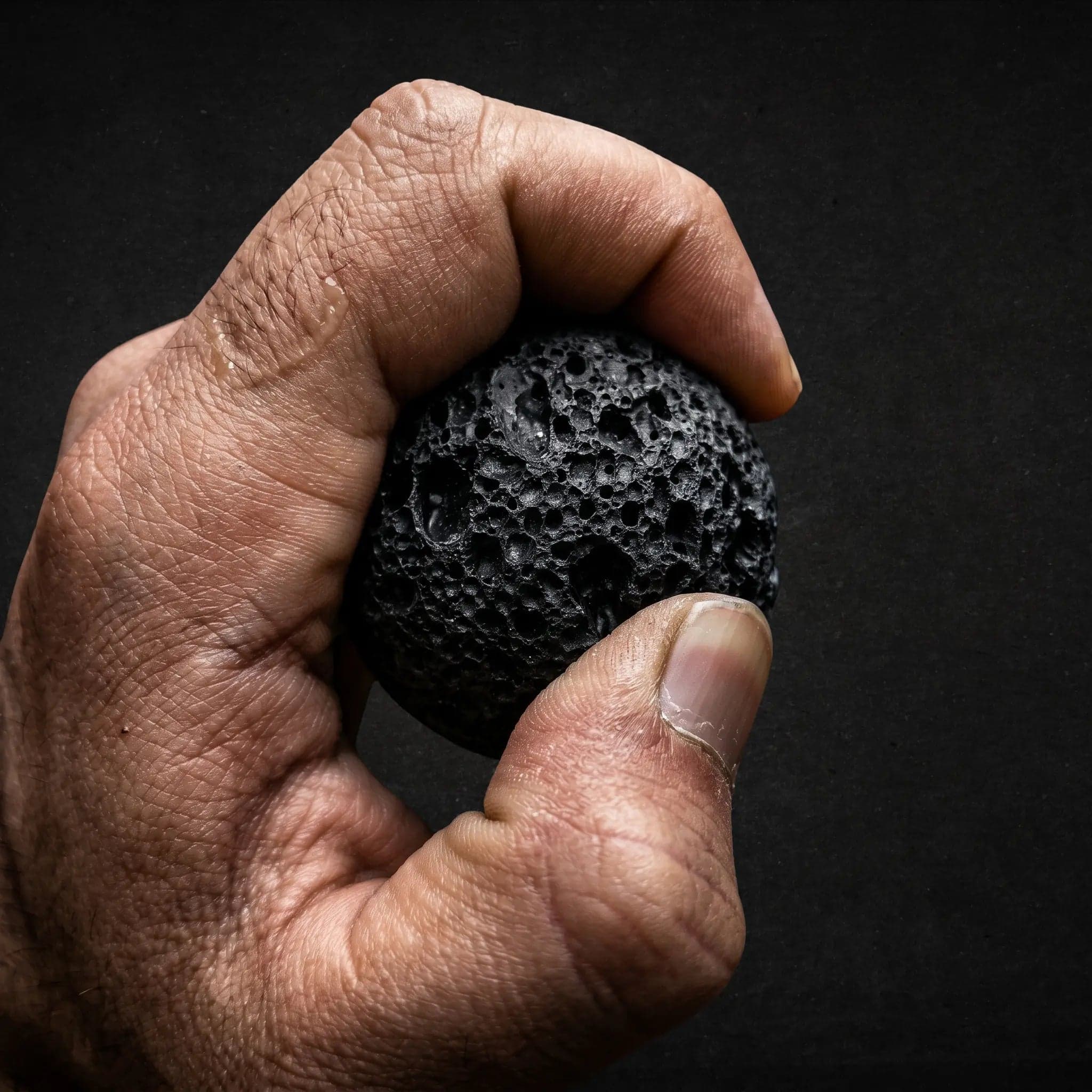







Basalt Orbs — Moon and Mars volcanic stones on slateMars — red volcanic scoria orb up closeMoon — black volcanic scoria orb up closeA hand holding both Basalt Orbs, Moon and MarsA hand gripping the Moon basalt orb

Basalt Orbs™

Volcanic basaltic rocks, shaped into orbs for daily hand conditioning. Hardens, exfoliates, and renews the skin surface.

The problem with modern hands

Your hands have nevertouched anythingrough enough.

For most of human history, hands worked daily with stone, timber, rope, and earth — materials rough enough to trigger a direct biological response in the skin. When the dermis experiences repeated friction and pressure against a hard surface, it responds by accelerating keratinocyte production in its outer layers, building a denser, more resilient structure over time. The skin thickens because the contact demands it.

Modern life removed that contact almost entirely. Keyboards, touchscreens, synthetic fabric — none of these materials generate the friction or mechanical pressure that triggers any dermal response. The hands of someone who has spent their life at a desk share the same problem as the feet of someone who has spent their life in shoes: the skin has never encountered anything that would give it a reason to respond.

Skin builds what repeated contact demands. Nothing more, nothing less.

The evidence is visible across occupations. Farmers, construction workers, craftsmen, and climbers develop noticeably thicker and more resilient skin on their hands — not as a side effect of their work, but as a direct biological adaptation to the materials they handle daily. Barefoot populations show the same pattern in their feet: significantly thicker plantar skin, with no loss of tactile sensitivity.

A hand gripping the Moon basalt orb

What it does to your skin

Seven effects.Two stones.

Volcanic scoria doesn't do one thing to skin. The combination of mechanical stimulus, mineral contact, and daily friction produces a cascade of biological responses — some obvious, some less so.

Callus formation

Repeated friction and pressure signal keratinocytes in the basal layer to increase keratin production — the palm thickens, the finger pads densify, the heel of the hand builds structure. The adaptation is specific to where contact is most consistent.

Epidermal renewal

Mechanical exfoliation removes accumulated dead cells from the stratum corneum and activates the epidermal renewal cycle. The basal layer receives the signal to replenish — faster cell turnover, fresher surface, skin that functions closer to its natural state.

Local circulation

Sustained friction against the palm dilates capillaries and increases microcirculation in the hand's dense vascular network. Oxygen and nutrients reach the dermis more efficiently. The visible flush during use is a normal vascular response to mechanical stimulus.

Hydration balance

Consistent mechanical exfoliation followed by oil application improves the skin's barrier function over time. Well-maintained skin retains moisture more effectively than neglected skin — or skin that has been over-abraded without recovery. The protocol produces skin that is dense and hydrated, not dry and rough.

Skin resilience

Conditioned skin is not just thicker — it's structurally more resistant to tearing under load. Athletes in climbing, rowing, and weightlifting develop skin that withstands high friction forces without delaminating. That resistance is a separate adaptation from callus density — it's the connective integrity of the tissue itself.

Callus maintenance

Mars used wet doesn't remove functional callus — it prevents it from becoming excessive, brittle, or cracked. The balance between Moon building dermal density and Mars maintaining the surface is what produces hands that are tough and functional, not dry and damaged.

Tactile sensitivity

Conditioned skin often feels more sensitive, not less. A 2024 study in the Journal of Cosmetic Dermatology found that stratum corneum compliance — its ability to deform under stimulus — directly improves tactile discrimination. Denser, well-maintained skin responds to touch with more precision, not less.

The two stones

Same volcano.Different history.

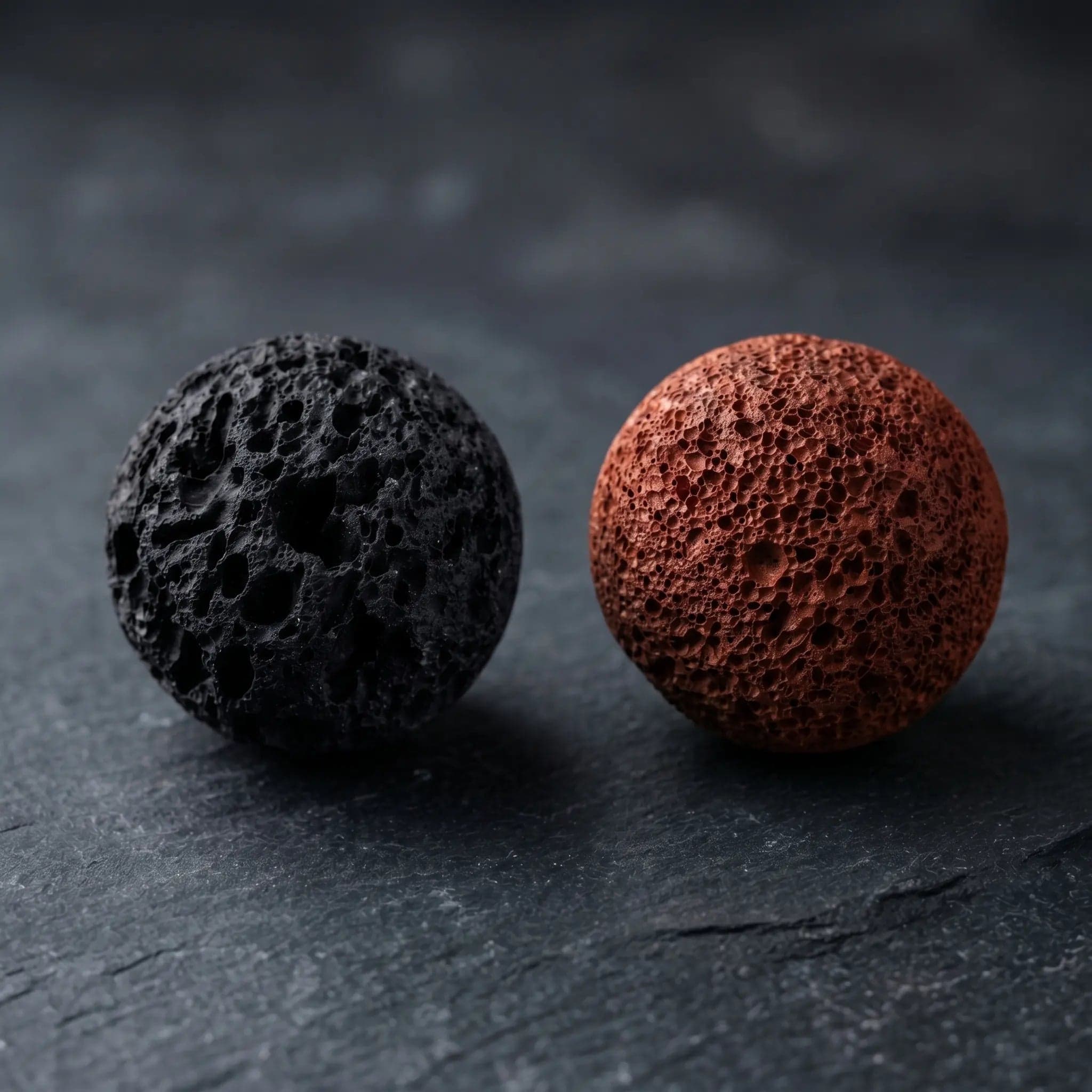
Both are volcanic scoria — the same rock, formed the same way. We selected one with large open pores and one with small dense pores because each creates a different mechanical stimulus against skin.

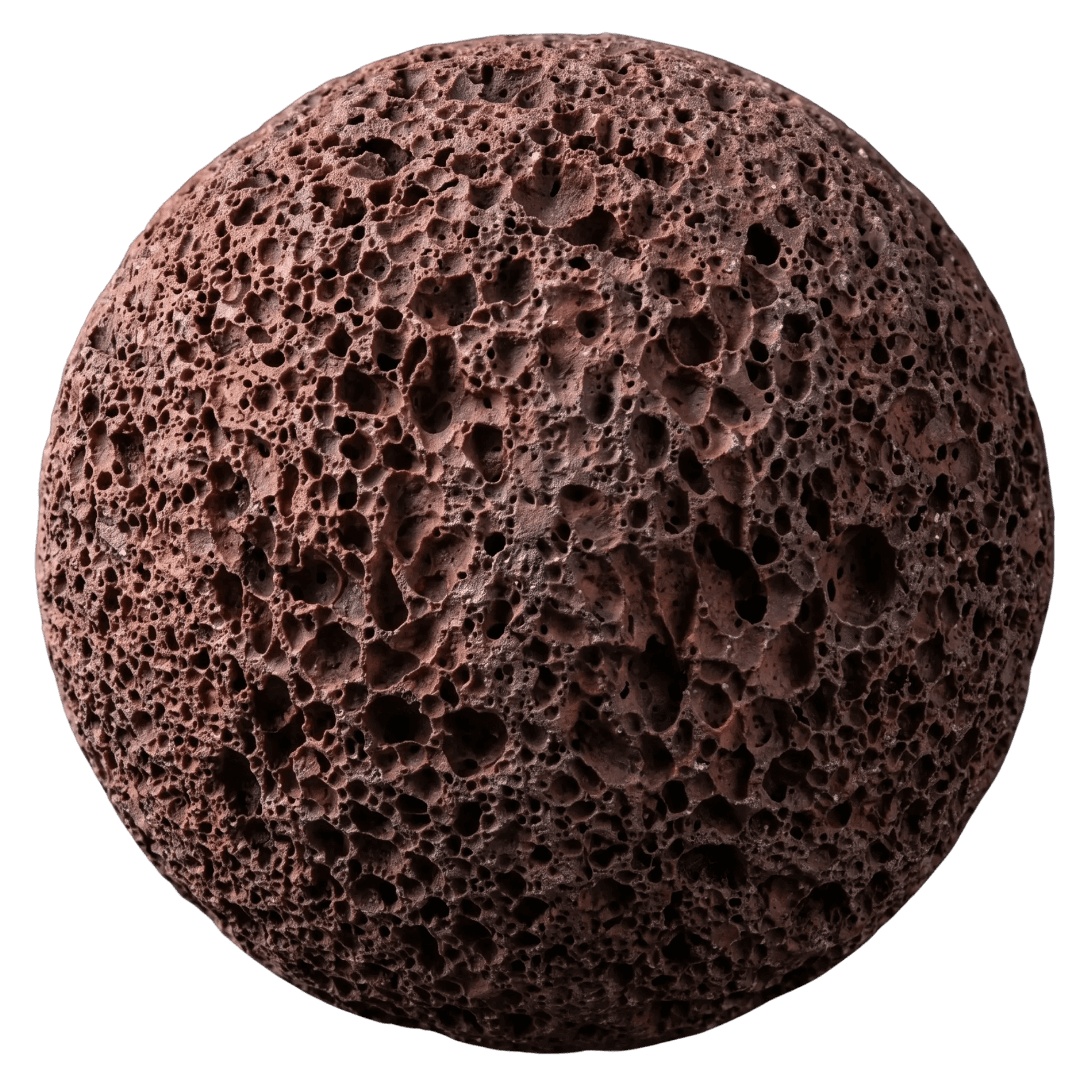
Mars — red volcanic scoria orb, dense fine pores

Red Scoria · Fine pore

Mars

Red volcanic scoria with dense fine pores. The surface is almost perfectly spherical — uniform contact across the entire palm simultaneously. Hundreds of small abrasion points that remove dead cells from the stratum corneum without concentrated pressure. Use it wet.

Hardness
5–6 Mohs
Pore size
Small · Dense
Feel
Even · Abrasive
Best for
Exfoliation

How to use

  1. Use in the shower or immediately after — skin warm and wet, outer layer soft and receptive.
  2. Roll slowly across the full palm. Even pressure, even contact. 3–5 minutes per hand.
  3. Apply jojoba or argan oil after. The skin rebuilds in this window. Don't skip it.

Why it works

Uniform abrasion renews skin.

Warm water opens the stratum corneum. The dense fine pores of Mars distribute mechanical stimulus evenly across the palm — removing dead corneocytes and activating the epidermal renewal cycle. The skin doesn't just get cleaned. It gets the signal to rebuild.
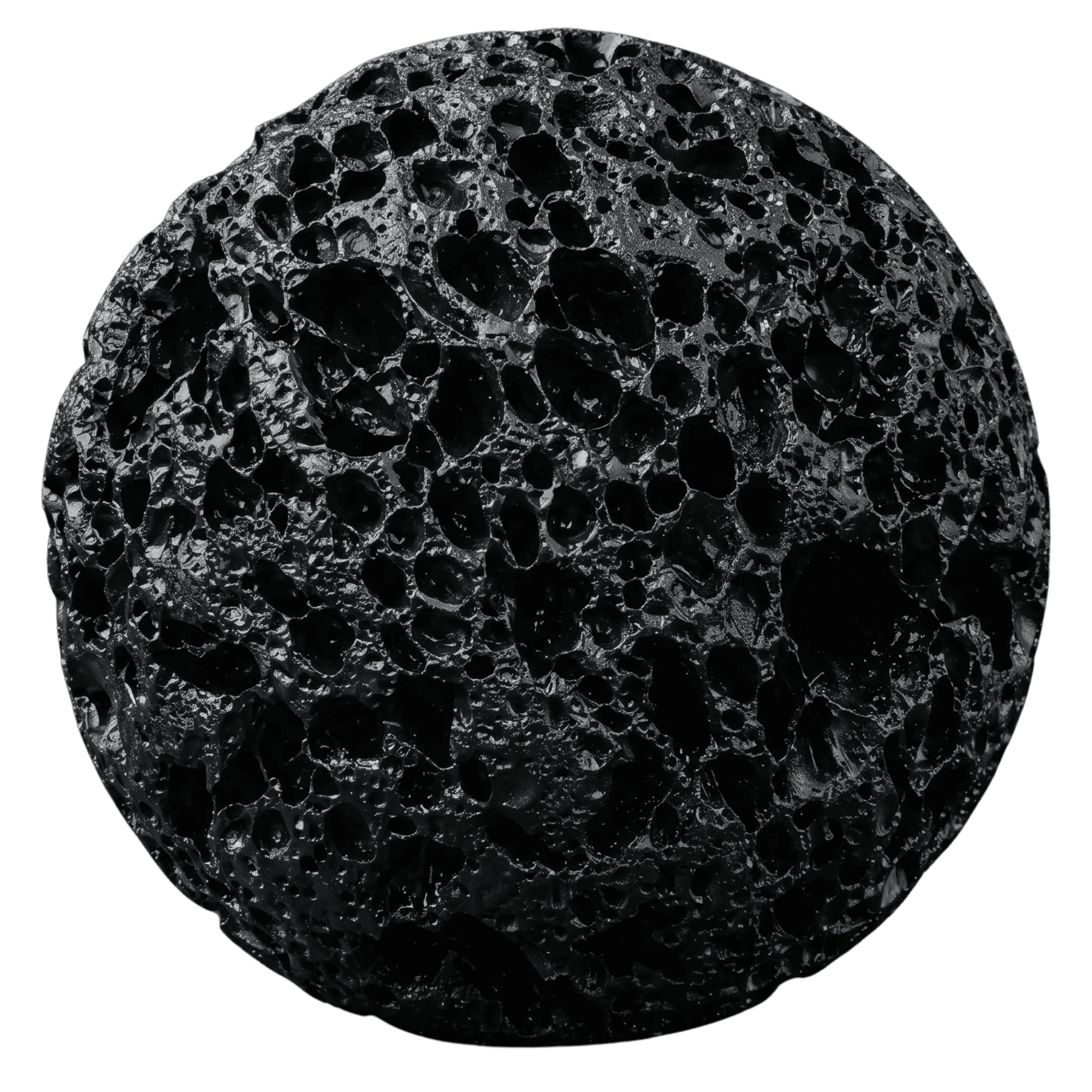
Moon — black volcanic scoria orb, large open pores

Black Scoria · Large pore

Moon

Black volcanic scoria with large open pores. The pore edges create concentrated pressure points across the palm — uneven, intense contact that signals the keratinocytes to thicken the skin where the stimulus is most consistent. Not a smooth tool. That's the point.

Hardness
5–6 Mohs
Pore size
Large · Open
Feel
Sharp · Pressure
Best for
Skin hardening

How to use

  1. Leave it on your desk. Pick it up between tasks, during calls, while reading.
  2. Roll slowly across the dry palm. The pore edges do the work — no need to press hard.
  3. Daily contact over weeks. The skin adapts where pressure is most consistent. That change is permanent.

Why it works

Pressure points trigger adaptation.

The large pore edges create localized pressure on the dermis. Repeated mechanical stimulus signals keratinocytes to increase keratin production in those zones — the same biological process that builds a craftsman's calluses over years of work, concentrated into a daily protocol.

The Dad Hands™ system

Better together.Inside and outside.

Dad Hands builds the internal structure of the hand. Basalt conditions the surface. One without the other is half the work.

Basalt Orbs skin-conditioning set

Skin conditioning

Basalt Orbs™

Volcanic basaltic rocks, shaped into orbs for daily hand conditioning. Hardens, exfoliates, and renews the skin surface.

  • Callus formation and skin resilience
  • Epidermal renewal and circulation
  • Tactile sensitivity and barrier function
Add to cart
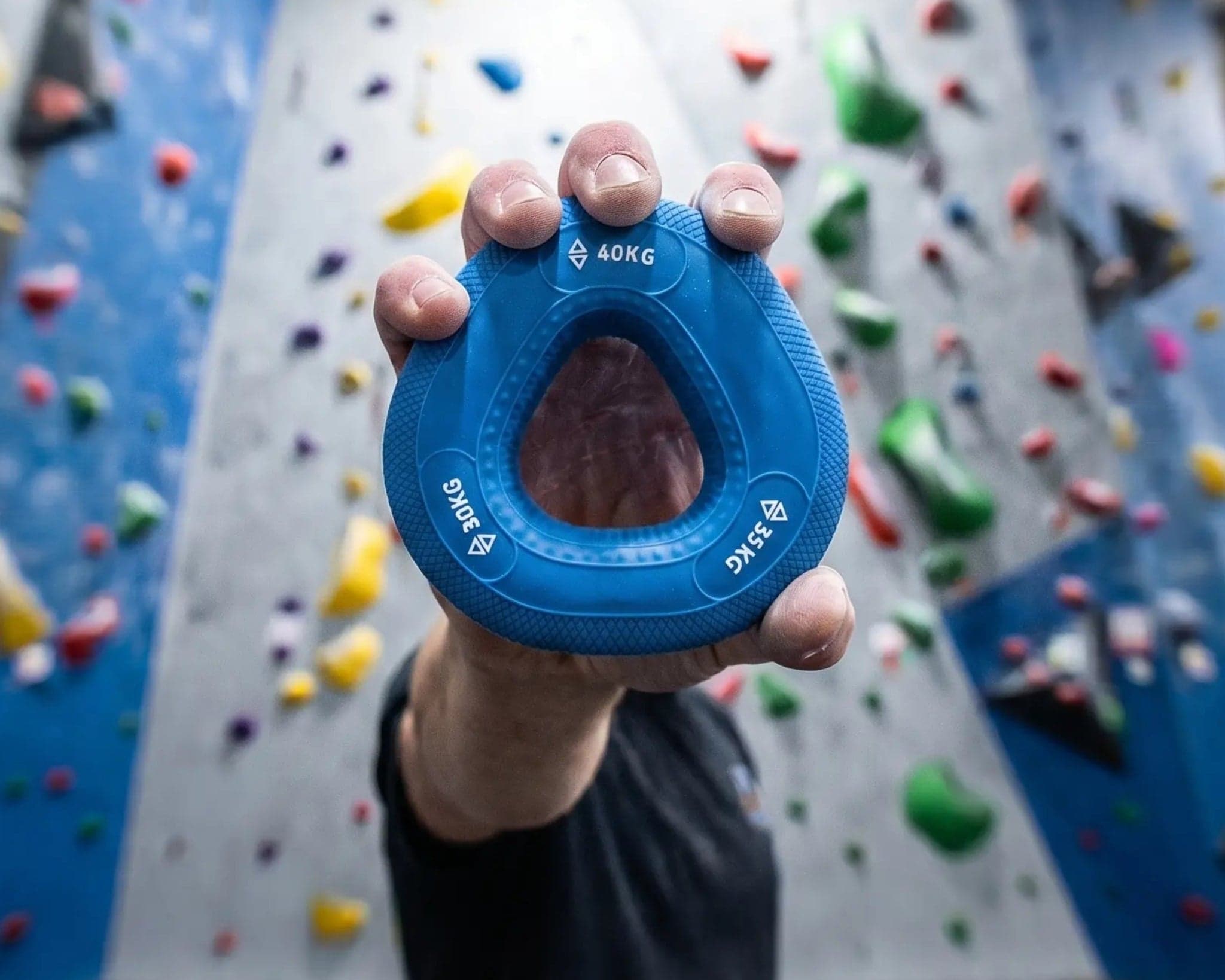
Dad Hands grip ring in use

Grip training

Dad Hands™

High-frequency grip training. Builds neural efficiency, muscle density, and tendon integrity — the internal architecture of a hand that works.

  • Neural adaptation — more motor units recruited
  • Muscle and tendon density over time
  • Grip strength that compounds daily
Get Dad Hands
A hand gripping the Moon basalt orb

Basalt skin conditioning orbs

Give your handssomething to say.

Volcanic basalt rocks, shaped into orbs for daily hand conditioning. Hardens, exfoliates, and renews the skin surface.

  • Hand-polished basaltic volcanic stone
  • Basalt Protocol PDF included
  • 99-day money-back guarantee
Get your Orbs

99-day refundSecure checkout100% natural stone

Basalt Orbs™ by GripSpan

Questions.

Everything you need to know about what the Orbs are, how they work, and what to expect.